
The Mystery of Kedarnath: Why the World’s Highest Jyotirlinga Remains Unstoppable
The sanctum sanctorum houses a self-manifested (Swayambhu) lingam

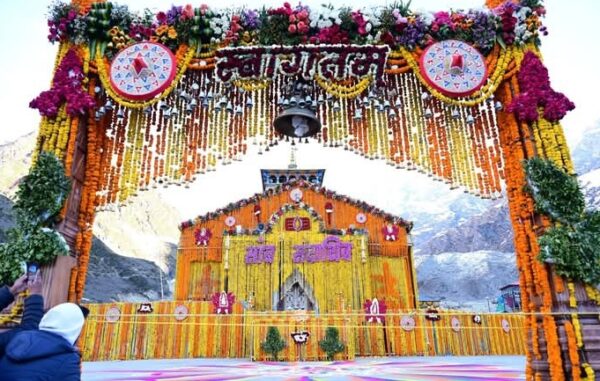
Kedarnath: The bells have rung, the prayers have started, and the “Abode of Gods” is once again awake. After 181 days of eerie silence and a deep slumber under a thick blanket of Himalayan snow, the gates of the Kedarnath Dham opened on April 22, 2026. ( written by MANISH CHANDRA)
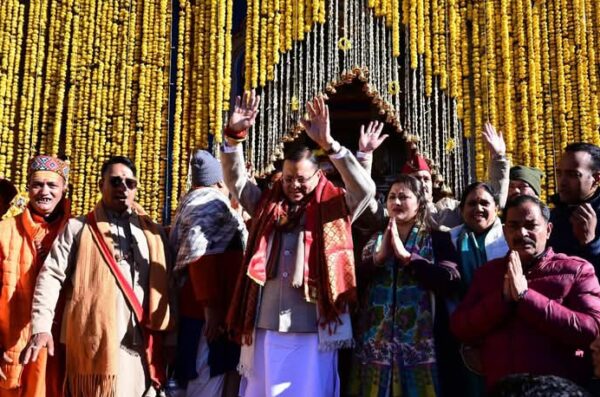
As the first rays of the summer sun touched the peaks, the sacred portal was opened with Vedic chants. The first “Mahabhishek” puja was performed in the name of Prime Minister Narendra Modi, marking the grand start of the Char Dham Yatra for global pilgrims.
Why is Kedarnath (Kedareshwar) the Most Unique Among the 12 Jyotirlingas?
While India is home to 12 sacred Jyotirlingas, Kedarnath holds a status that is geographically and spiritually unparalleled.
- The Crown of the Himalayas: Sitting at a staggering altitude of 11,755 feet (3,583 meters), it is the highest Jyotirlinga in the world.
- The Direct Link to Moksha: In Sanatan Dharma, the cold, pure air of Kedarnath is believed to bridge the gap between man and the Divine instantly.
- The 400-Year Burial: Geological studies suggest that the temple remained completely buried under snow during the “Little Ice Age” (1300–1900 AD), yet it emerged unscathed—a testament to its divine and structural resilience.

The Science of Survival: How the Temple Withstood the 2013 Disaster
The 2013 flash floods were apocalyptic, wiping out entire towns and forests. Yet, the 8th-century temple stood firm. This wasn’t just luck; it was a masterclass in Ancient Indian Engineering:
- The ‘A’ Shape Design: The temple’s roof is sloped and pointed. When millions of tons of debris and water hit the structure, this wedge-like shape divided the force, diverting the destruction around the sides.
- Interlocking Masonry (The ‘Lego’ Style): Built without cement or mortar, the massive grey stones are interlocked . During earthquakes or floods, these stones can slightly shift and “breathe” to absorb energy rather than cracking.
- The Divine Shield (Bheem Shila): Just as the waters reached the temple, a massive boulder—now worshipped as Bheem Shila—rolled down and stopped exactly behind the temple, acting as a protector and splitting the raging river into two streams.
A Legacy from the Mahabharata to Adi Shankaracharya
The history of Kedarnath is a tapestry of legends. It is believed the Pandavas built the original shrine to seek atonement after the Kurukshetra war. Lord Shiva, taking the form of a bull, dived into the earth here, leaving his “hump” as the triangular Jyotirlinga we see today.
A Sacred Legacy: The 12th Jyotirlinga and Panch Kedar
Kedarnath is not just a temple; it is one of the most revered shrines in the world. It is classified as a Paadal Petra Sthalam, placing it among the 275 most significant Shiva temples on the planet. Furthermore, it holds the primary position among the Panch Kedars—the five specific Himalayan temples where different parts of Lord Shiva are worshipped.
The sanctum sanctorum houses a self-manifested (Swayambhu) lingam. Unlike traditional idols, this triangular rock formation is believed to have appeared naturally, untouched by human hands, radiating a divine energy that attracts thousands of seekers every year.
Later, in the 8th century, the great philosopher Adi Shankaracharya revived the temple from ruins. To this day, the tradition continues with the Nambudiri Brahmins from Kerala (South India) serving as the high priests in this Northern Himalayan peak—symbolizing the spiritual unity of India.
Travel Tips for Global Pilgrims 2026
- Mandatory Registration: Ensure you register on the Uttarakhand Tourism portal before your journey.
- Weather Watch: Temperatures can drop below freezing even in May. Carry heavy woolens.
- Sustainability: Following the Chief Minister’s call, pilgrims are encouraged to maintain a “Green and Clean” Yatra to protect the fragile Himalayan ecosystem.
“Best Himalayan treks for international tourists 2026”
“Guide to visiting Kedarnath for foreign nationals”
“Spiritual tourism in India for global travelers”
“Ancient architecture of Himalayan temples”
Photo – DIPR UTTRAKAND